TAMPA, Fla.(Jan. 25, 2017) -- Educators across the country are in the process of implementing a new comprehensive system that allows teachers to better identify students at risk of turning violent. It’s an expansion of the Social, Academic and Emotional Behavior Risk Screener (SAEBRS), developed by school psychologist Nathaniel von der Embse, PhD, an assistant professor in University of South Florida College of Education.
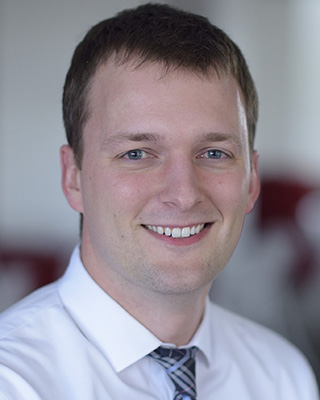 Nathaniel von der Embse
Through a $1.4 million grant from the Institute for Educational Sciences in the U.S. Department of Education, von der Embse and collaborator Stephen Kilgus, PhD, University of Missouri, created the update, strengthening teachers’ ability to recognize students who internalize issues such as anxiety and withdrawal, rather than just those who exhibit disruptive behaviors.
Students in grades K-12 are
evaluated on how they perceive their own behavior and mental health. They’re
asked to rate questions such as “I like school,” “I argue with others” and “I
feel nervous.”
“Nearly 1 in 5 students will experience a severe
mental or behavioral health problem during their academic careers, yet many do
not receive the help they need,” said Dr. von der Embse. “Our goal is to equip
teachers with the tools necessary to intervene early and get kids the help they
need to succeed.”
The expansion helps educators better match
intervention strategies to a student’s individualized needs. Examples include
developing a stronger relationship with the student and their parents,
recognizing when a student needs additional instruction and academic support, or
providing social-emotional learning to build coping skills.
Schools in 25 states started using SAEBRS in 2014
and a handful, including some in the Philadelphia Public School District, are
in the process of implementing the new system. The next phase is to involve
parental perception, creating a more robust system of care.
- Story by Tina Meketa, University Communications and Marketing